
Wilhelm Tell’s Personal Arc
William TellThis flow follows Tell from independent mountain hunter through forced ordeal, resistance, and a changed relationship to violence.
increasing Bearing strength in each event
 decreasing
Bearing strength in each eventdecreasingThe Independent Hunter
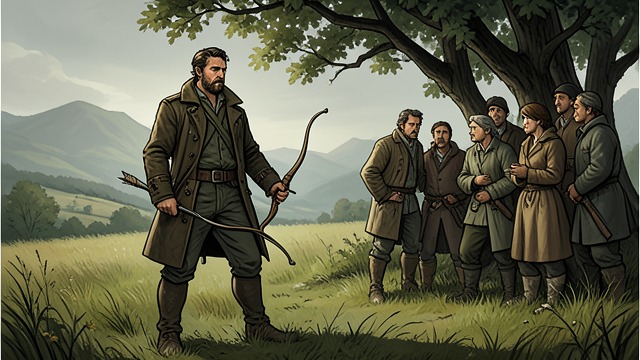
The Independent Hunter
A life beyond politics
Wilhelm Tell presents himself as a practical man who prefers action to councils. He hunts in the mountains, trusts his own judgment, and tells Werner Stauffacher that he will help when the country’s course is clear.
Independence and obligation
His independence is not indifference. Tell has already risked his life to carry Conrad Baumgarten across the stormy lake, believing that another person’s immediate need leaves no room for hesitation.
The contrast establishes his character: he resists organized plotting but acts decisively when danger becomes concrete. His private virtues later make him an emblem of the wider cause, whether he seeks that role or not.
A Test of His Skill
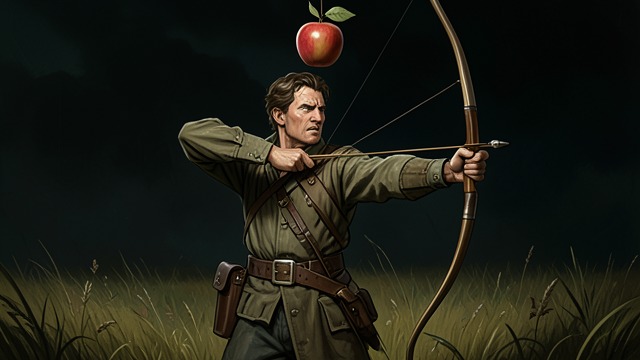
A Test of His Skill
The governor’s challenge
After Tell refuses to salute Gessler’s hat, the governor forces him to shoot an apple from Walter Tell’s head. What had been a skill of hunting becomes a weapon in an official’s public humiliation of a family.
Courage under unbearable pressure
Tell falters as he takes aim, then steadies himself. Walter’s composure and trust help him complete the shot without injuring the boy.
The feat is both a rescue and a wound. Tell has obeyed under threat, but he cannot forget that his son’s life was made the target of political power.
A Prisoner in Chains
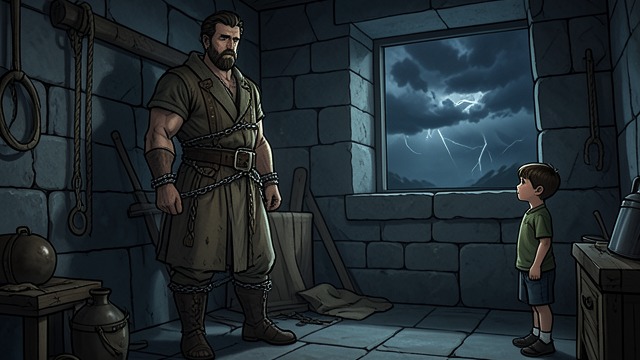
A Prisoner in Chains
Truth at a price
Gessler asks why Tell carried a second arrow. Tell answers that he would have used it against the governor had the first arrow killed Walter.
A promised life withheld
Gessler keeps his literal promise not to kill Tell but orders him bound and taken to confinement. The distinction between sparing and protecting becomes empty under arbitrary rule.
Tell’s capture frightens his family and allies, but he refuses to make their fear his last word. His release will depend on opportunity and skill rather than the assurances of authority.
Escape Through the Storm
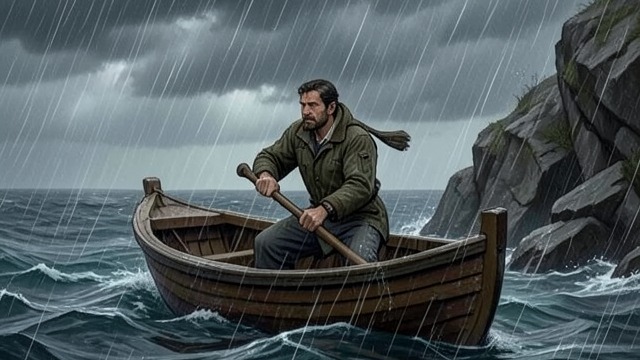
Escape Through the Storm
A forced bargain
A violent storm threatens the vessel carrying Tell toward Küssnacht. Gessler’s party frees Tell’s hands so that he can steer them through the dangerous water.
A return to agency
Tell guides the ship toward a rocky ledge, springs onto it with his weapons, and shoves the vessel back into the storm. The storm that makes him useful also opens his chance to escape.
He is free, but still in danger: Gessler may survive and continue the pursuit. Tell turns toward the route where he can confront that threat directly.
The Bow Set Aside
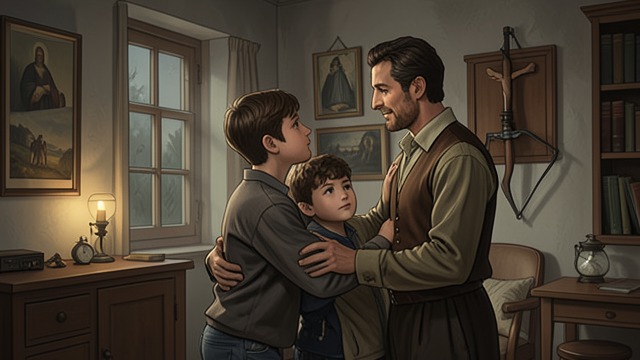
The Bow Set Aside
A homecoming
Tell returns to Hedwig and their sons after the country has been freed. Their reunion closes the separation caused by Gessler’s arrest and restores his place within his household.
An altered relation to violence
Tell says that his crossbow hangs in a holy place and will no longer be used for the hunt. His words suggest that the crisis has transformed a familiar tool into a reminder of the deeds forced upon him.
His story does not end with a claim to political office. It ends with the return to family life, while his actions remain part of the country’s shared memory.
Early in the story, at Tell’s home
Midway through the story, at Altdorf
Immediately after the apple shot
Soon after his capture, aboard Gessler’s ship
Near the ending, after liberation
